If your project needs more than a basic garage or carport, cold formed steel buildings are often where the conversation gets serious. They are a practical option for buyers who need engineered performance, cleaner spans, code compliance, and faster construction without stepping into the cost and complexity that can come with heavier structural systems.
For property owners, contractors, and commercial buyers, that matters. Whether you are planning a warehouse, workshop, agricultural facility, office-warehouse combo, or a larger custom-use structure, the building system you choose affects budget, permitting, timeline, and long-term maintenance. Cold formed steel is not the right answer for every job, but it is a strong fit for many projects where efficiency and performance both matter.
What cold formed steel buildings are
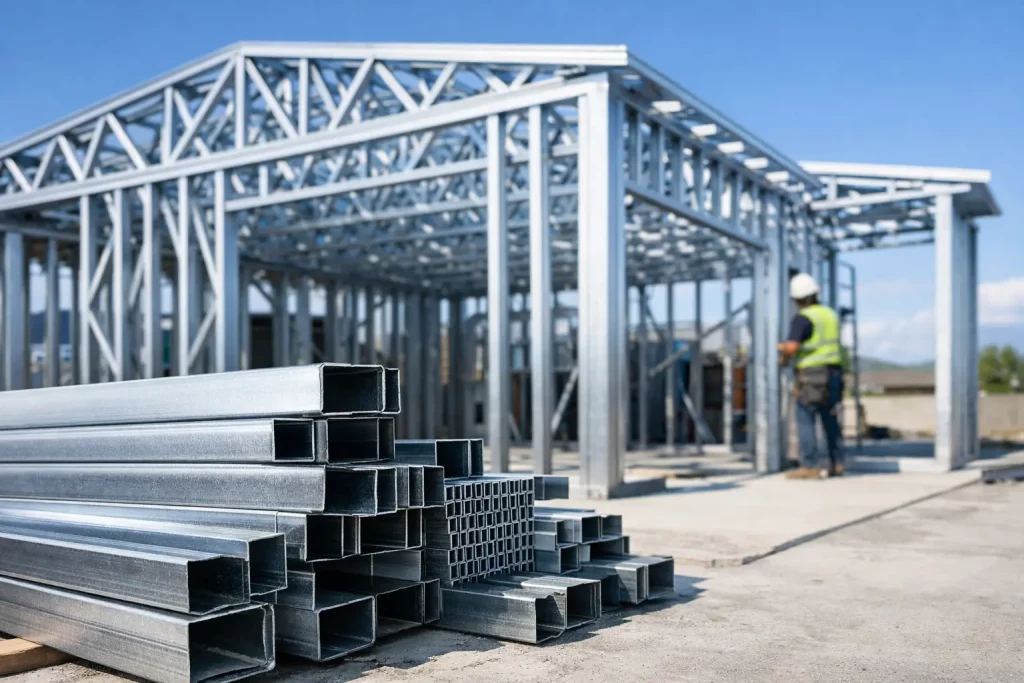
Cold formed steel buildings use thin sheets of steel that are shaped into structural components at room temperature. That forming process creates framing members with high strength relative to their weight. Instead of relying on hot-rolled, heavy steel sections for every part of the structure, these buildings use precisely engineered members designed to carry the required loads with less material.
That lighter profile is part of the appeal. It can reduce foundation demands, simplify handling on site, and help move a project along faster. At the same time, the system still delivers the durability and weather resistance buyers expect from steel construction.
In practical terms, these buildings are often used for commercial shops, industrial spaces, storage facilities, agricultural buildings, and other projects that need dependable structural performance with room for customization. They can also be a smart choice for code-driven jobs where engineering documentation and stamped plans are part of the process.
Why buyers choose cold formed steel buildings
Most customers are not comparing framing methods for fun. They are trying to solve a real problem. They need space for equipment, inventory, operations, vehicles, livestock support, or business growth, and they need a building that works now and still works years from now.
Cold formed steel buildings stand out because they balance several priorities at once. They are strong, relatively lightweight, and adaptable to a wide range of dimensions and layouts. They can be engineered for local wind and snow loads, which is a major factor for buyers who want confidence during permitting and construction. They also tend to support faster project schedules than many traditional building methods.
That speed is not just a convenience. For a business owner, a delayed building can mean delayed revenue. For a farm operation, it can mean equipment left exposed or workflow bottlenecks during busy seasons. For a contractor, it can mean added labor costs and scheduling headaches.
Where this building system makes the most sense
Not every project needs the same level of structural capability. A simple cover for a vehicle may be well served by a more standard metal building option. But when the project gets larger, more specialized, or more demanding from an engineering standpoint, cold formed steel becomes more attractive.
A commercial shop is a good example. If you need open usable space, overhead doors, insulation options, and a layout that supports daily operations, the framing system matters. The same goes for warehouse buildings where clear floor area, storage efficiency, and long-term durability all affect how useful the building will be.
Agricultural buyers also benefit from this approach when they need equipment storage, hay protection, workshop space, or multipurpose farm buildings built for local conditions. In areas where weather can turn quickly, steel construction offers a practical level of protection with lower upkeep than many wood-framed alternatives.
For specialty projects, such as barndominiums or mixed-use buildings, cold formed steel can also bring more design flexibility while keeping the structure rooted in engineered performance. That does not eliminate planning decisions, but it gives buyers a strong starting point.
The real advantages and the real trade-offs
The best way to evaluate cold formed steel buildings is honestly. They offer major benefits, but they are not magic.
One of the biggest advantages is precision. Components are engineered and manufactured to specific requirements, which helps create a more predictable construction process. Steel is also resistant to pests, rot, and many of the issues that can shorten the life of other materials. Maintenance needs are typically lower, especially when the building is properly installed and finished for its intended use.
Another advantage is customization. Width, length, height, door placement, insulation packages, roof styles, and interior use can all be planned around how the building will actually function. That is especially important for business owners and landowners who do not want to pay for a structure that is close enough but still inconvenient every day.
The trade-offs usually come down to project fit, design coordination, and budget expectations. A more engineered system can involve more up-front planning than a very basic metal structure. Site prep, foundation work, local code requirements, and intended occupancy all affect the final cost. If a buyer is only looking for the cheapest possible shelter, a cold formed steel solution may be more building than they need.
That is why the right question is not, Is this the lowest price option? The better question is, Does this system match the demands of the project?
Planning factors that affect price and performance
When buyers ask what a cold formed steel building costs, the honest answer is that it depends on more than square footage. Building size is part of it, but it is only one part.
Engineering requirements can change pricing significantly. So can local wind exposure, snow loads, foundation specifications, insulation needs, and the number and type of framed openings. A warehouse with multiple roll-up doors, a walk door package, liner or insulation, and a taller sidewall will price differently than a simpler storage building of similar footprint.
The intended use matters too. If the building is for conditioned workspace, retail support, mechanical operations, or occupancy with stricter code requirements, the design details become more involved. On the other hand, if the structure is primarily for dry storage or equipment protection, the scope may stay more streamlined.
This is where working with a provider that understands both standard metal buildings and more advanced project needs can save time. Buyers do not just need a number. They need a building package that fits the site, the use case, and the permitting path.
Cold formed steel buildings and code compliance
For larger or more regulated projects, code compliance is not a side issue. It is central to the project. That includes structural engineering, foundation coordination, local load requirements, and in some cases architect-stamped or engineer-stamped plans.
Cold formed steel buildings are often chosen because they can be designed with those requirements in mind from the start. That helps reduce guesswork and puts the project on firmer footing when it is time to move through approvals.
This matters even more in commercial settings. A business expansion or new facility cannot afford expensive redesigns after the fact. Buyers need to know the structure they are ordering is aligned with real-world permitting and construction needs, not just an online price point.
How to know if this is the right option for your project
Start with the use of the building, not just the dimensions. Think about what will happen inside it six months from now and five years from now. Will you need open interior space, room for large vehicles or equipment, added insulation, office build-out potential, or a layout that supports customer-facing operations?
Then look at your site and local requirements. Wind exposure, drainage, foundation conditions, and permit expectations all shape what makes sense. A building that looks good on paper can become a problem if it does not fit the actual job site or approval process.
It also helps to think in terms of value rather than base price alone. A lower-cost structure is not necessarily the better buy if it creates compromises in function, durability, or lifespan. Many customers find that spending more up front for the right building package saves money and frustration over time.
For buyers in Tennessee and across the South, weather resistance and installation speed are often high priorities. That is one reason cold formed steel continues to gain attention for projects that need dependable performance without unnecessary delay.
A provider that can handle both everyday metal building needs and more advanced engineered structures gives you more room to make the right choice. Taylor Wilson Steel works with customers who need that range, from simpler utility buildings to larger code-driven projects where cold formed steel is the better fit.
The smartest building purchase is usually the one that solves the whole problem, not just the one that fills the space on your property. If your project calls for speed, strength, and a more engineered approach, cold formed steel is worth a serious look.