
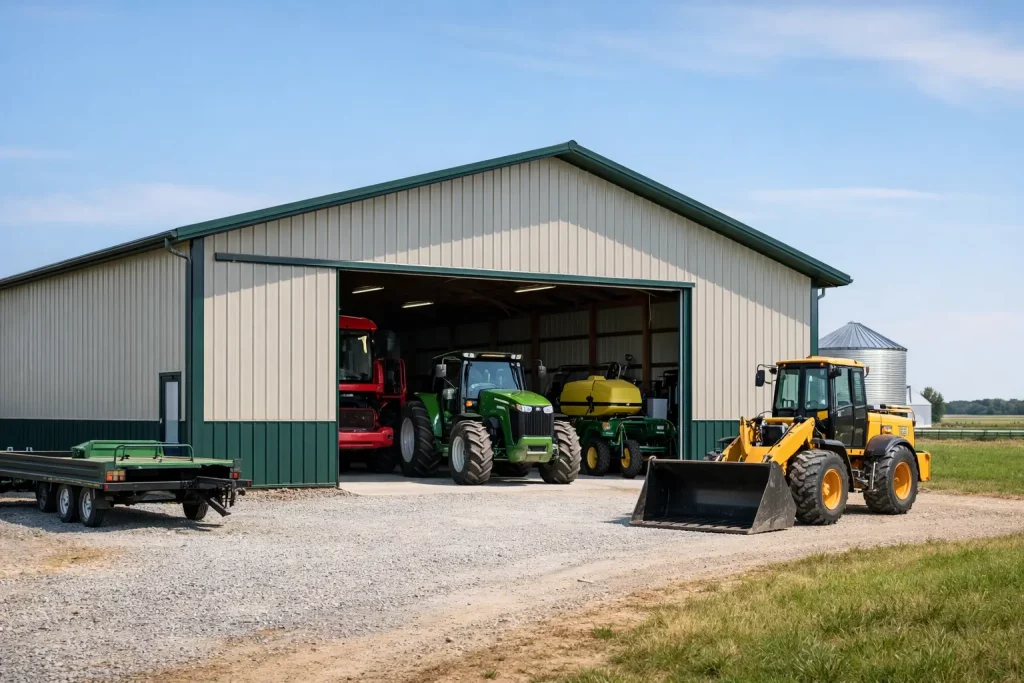
A tractor left out in the weather ages fast. Hoses crack, seats fade, wiring takes a beating, and the next busy season starts with repairs instead of work. A well-planned farm equipment storage building helps protect the machines you rely on, cuts down on maintenance, and gives you a more organized operation day to day.
The key is choosing a building that fits the way your farm actually works. Bigger is not always better, and the cheapest option is not always the most cost-effective once you factor in weather exposure, layout problems, and future equipment changes. The right structure should protect your investment now and still make sense five or ten years from now.
What a farm equipment storage building needs to do
On most properties, equipment storage is about more than parking a tractor under roof. You may need room for combines, cutters, balers, sprayers, utility vehicles, attachments, seed pallets, fuel tanks, or a service area for quick maintenance. That means the building has to do several jobs at once.
First, it needs to provide real protection from sun, rain, wind, and in some areas snow load. Constant weather exposure shortens the life of paint, tires, belts, hydraulics, and electrical components. Even equipment built for hard field use benefits from being stored dry and shaded.
Second, it needs to improve efficiency. If getting one machine out means moving three others, the building is working against you. A good layout reduces bottlenecks, shortens load-up time, and helps keep seasonal tools where they belong.
Third, it should match your site conditions and operating pattern. A ranch with wide-open access may need a different layout than a smaller farmyard with tighter turns, existing drive lanes, or grade challenges. That is where customization matters.
Start with equipment dimensions, not rough guesses
One of the most common mistakes is estimating size based on memory instead of measuring actual equipment. Modern farm equipment is larger than many owners realize, especially once you account for folded booms, loader attachments, dual wheels, or implements parked separately.
Measure overall height, width, and length for every major unit you want under cover. Then add room for door clearance, turning space, walk space, and maintenance access. If you only size the building to the machine footprint, you can end up with a structure that technically fits the equipment but is frustrating to use.
Height deserves extra attention. Side height and entry height are not the same thing, and roof style can affect usable interior clearance. If you plan to store taller tractors, combines, or stacked materials, the building should be designed around the tallest real-world use case, not just the average one.
Future growth matters too. If you are likely to add a larger tractor, another hay unit, or more attachments within a few seasons, it usually makes sense to build for that now. Expanding later is possible in some cases, but it is not always as simple or as economical as doing it right the first time.
Open-sided, partially enclosed, or fully enclosed?
The best farm equipment storage building is not always a fully enclosed shop. It depends on what you are storing, how often you need access, and what kind of weather exposure you are trying to prevent.
An open-sided structure works well when fast drive-through access is the priority and the main goal is shielding equipment from sun and rain. This setup is common for tractors, hay equipment, and implements that are used frequently. It is often the most budget-friendly way to get equipment under roof quickly.
A partially enclosed building gives you a middle ground. Adding side panels or end walls can block prevailing wind and blowing rain while keeping the structure easy to access. For many Southern properties, this is a practical choice because it improves protection without making daily movement more complicated.
A fully enclosed building offers the highest level of security and weather protection. This is usually the better fit for higher-value equipment, tools, materials, and any operation that wants lockable access and a cleaner interior environment. The trade-off is cost and planning. Doors, ventilation, and traffic flow become more important, and you need to think through how equipment will enter, turn, and park without wasting space.
Why steel makes sense for equipment storage
For agricultural use, steel buildings are a practical choice because they are strong, low maintenance, and adaptable to different layouts. A properly designed steel structure stands up well to tough weather conditions and daily use, which is exactly what most farms require.
Wood-framed buildings still have their place, but many owners prefer steel because it resists rot, pests, and many of the maintenance issues that come with long-term exposure to moisture and heat. That matters when the building is protecting expensive machinery and may not get constant attention.
Steel also gives you flexibility in width, length, height, bay spacing, and enclosure options. If you need a simple cover for tractors or a larger clear-span structure for multiple machines and attachments, steel can be configured around those needs without overcomplicating the project.
For buyers who want to move quickly, metal building systems can also support faster timelines than many traditional construction methods. That is especially valuable when equipment is already sitting outside and another season of exposure is not a good option.
Layout decisions that affect daily use
A farm equipment storage building can look good on paper and still create headaches in practice. That usually comes down to layout.
Think about how equipment moves across your property. If possible, place the building where trucks, trailers, and machinery can approach in a straight line or with wide turns. Tight corners waste time and increase the risk of damage to both equipment and the structure.
Door placement matters just as much as building size. Wide end openings may be ideal for long equipment or pull-through traffic. Side openings can work well when the site is long and narrow. Multiple bays may help separate seasonal tools from equipment used every day.
It is also worth deciding whether you want dedicated space for service and storage beyond the equipment itself. Many owners start with a machine shed concept and later wish they had included room for filters, tools, grease, parts, and a workbench. If those functions matter to your operation, plan for them up front.
Site prep, codes, and weather loads
The building is only as good as the site under it. Proper site prep affects drainage, stability, and long-term performance. A level pad, good access, and attention to water flow around the building can prevent problems that become expensive later.
Local code requirements and load ratings also need to be part of the decision. Wind exposure, snow load, and anchoring requirements vary by location. In Tennessee and across much of the South, storm resistance is a serious consideration, and buyers should not treat engineering details as optional.
This is one area where working with an experienced steel building provider pays off. You want a structure designed for your site conditions, not just a one-size-fits-all package. For larger agricultural or code-driven projects, that may also mean stepping up to more advanced steel building options with engineered plans.
Custom features worth considering
Not every feature adds value for every farm, but some upgrades can make a big difference in how the building performs.
Vertical roof panels are often a smart choice for larger buildings because they help water and debris shed more effectively. Taller legs or sidewalls may be needed for larger equipment, even if your current lineup only barely requires them. Framed openings, roll-up doors, walk-in doors, and enclosed end sections can improve function depending on how you use the space.
Ventilation is another detail that gets overlooked. Even equipment storage buildings benefit from airflow, especially when storing machines that may come in damp from the field. Condensation control can also matter in enclosed configurations.
If appearance matters near a home, farm office, or visible roadside location, color choices and trim packages can help the building fit the property better without changing its core function.
Buying for long-term value, not just upfront price
Price matters, but the lowest quote is not always the best buy. A cheaper building that is undersized, poorly configured, or not rated for your conditions can cost more over time through repairs, workflow problems, and replacement needs.
A better approach is to compare what you are actually getting. Look at dimensions, steel quality, roof style, enclosure level, engineering, installation support, and how well the design fits your equipment list. If the building saves wear on machines, reduces downtime, and helps your operation run cleaner, that value shows up long after the initial purchase.
For many property owners, the right path is a customized steel solution that balances budget with real-world use. Tools like a 3D building designer can help you test dimensions, openings, and layout ideas before you commit, which makes the buying process more precise and less guesswork.
A farm equipment storage building should make daily work easier, not just give equipment a place to sit. When the size, layout, and steel package are matched to the way you farm, you end up with a structure that protects your equipment and keeps paying you back every season.