
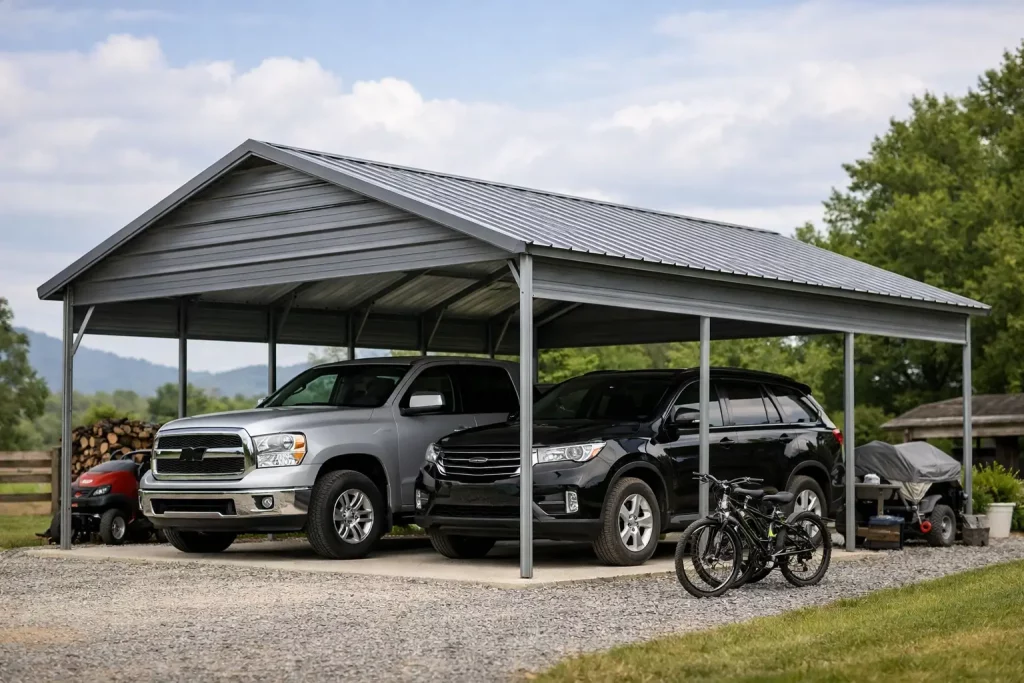
When a carport has to stand up to heavy rain, falling leaves, summer heat, and the day-to-day wear of real property use, roof style stops being a cosmetic choice. That is where vertical roof carport benefits become easy to see. For many buyers, the roof design directly affects drainage, upkeep, appearance, and how well the structure performs over time.
A lot of property owners start with price, which makes sense. But the lowest upfront option is not always the best fit if you are covering multiple vehicles, storing equipment, protecting an RV, or placing a structure where weather tends to hit hard. A vertical roof carport usually costs more than a regular or boxed-eave design, but it solves problems that cheaper roof styles can create later.
Why vertical roof carport benefits stand out
The key difference is the orientation of the roof panels. On a vertical roof carport, the panels run from the ridge down toward the eave. That design helps water, snow, leaves, and debris move off the roof more efficiently. It also requires additional framing components, which improve support and give the structure a more finished look.
That extra engineering is a big reason vertical roofs are commonly considered the strongest and most capable option in metal carports. If your goal is basic shade, another roof style may work. If your goal is long-term protection with fewer performance headaches, vertical often makes more sense.
Better water runoff in rain-heavy areas
One of the biggest practical advantages is drainage. In areas that see frequent rain, water needs a clear path off the roof. Since the panels run vertically, water sheds more naturally instead of moving across horizontal ribs.
For buyers in Tennessee and across the South, that matters. Strong storms, steady rainfall, and seasonal buildup from trees can put a lot of stress on any outdoor structure. A vertical roof design helps reduce standing water and lowers the chance of moisture-related wear over time.
This does not mean any carport becomes maintenance-free. Gutters, grading, and proper site prep still matter. But when the roof is designed to move water efficiently, you start with an advantage.
Less debris buildup and easier upkeep
Leaves, pine needles, small branches, and dirt have a way of collecting on roofs that do not shed material easily. Over time, that buildup can trap moisture and make a carport look older than it is. It can also create extra cleanup work, especially if the structure sits near trees or along a fence line.
A vertical roof helps debris slide down more readily. That can mean less frequent cleaning and fewer clogged areas where moisture tends to linger. For homeowners, farmers, and business owners who want low-maintenance protection, that is a real benefit, not just a sales point.
It is still smart to inspect the roof periodically, especially after storms. But compared to lower-cost roof styles, vertical roofs generally make routine upkeep simpler.
Stronger fit for larger spans and taller structures
Not every carport is a simple two-car setup in a driveway. Some buyers need taller clearance for RVs, enclosed trailers, tractors, skid steers, boats, or work trucks. Others want wider coverage for multiple vehicles or combined vehicle-and-equipment storage.
That is where vertical roofs often become the preferred choice. Because of their framing system and overall design, they are well suited for larger structures and taller applications. They tend to look more proportionate on bigger buildings, and they perform better when the carport has to do more than cover a sedan.
If you are planning a wide-span unit, a long RV cover, or a custom structure that may eventually be enclosed on the sides and ends, choosing vertical from the start can save you from outgrowing the building too quickly.
A cleaner, more finished appearance
Function comes first, but appearance still matters. A carport is part of your property, and it can either blend in well or look like an afterthought. Vertical roof systems typically have a sharper, more refined appearance than regular roof options.
The lines are cleaner, the structure looks more substantial, and the roof style often pairs better with homes, garages, barns, and commercial buildings that already use vertical metal panels. For buyers who want a carport that adds practical value without hurting curb appeal, this is one of the more overlooked benefits.
That is especially true if the structure will be visible from the road, sit near a primary residence, or serve customers at a business location. A better-looking building is not just about pride of ownership. It can also help the property feel more organized and professionally maintained.
Better long-term value for the right use
The lowest sticker price does not always equal the best value. Vertical roof systems usually cost more upfront because they include more material and labor. The question is whether the added performance justifies the cost.
For many buyers, it does. If the carport will protect high-value vehicles, support daily use, or remain in place for many years, the durability and lower maintenance burden can make the extra investment worthwhile. The same is true when weather exposure is a major concern.
There are cases where a standard roof still makes sense. If you need an economical cover for light use in a more sheltered setting, a less expensive configuration may be enough. But if you are thinking beyond the initial invoice and weighing long-term protection, vertical often comes out ahead.
More customization potential
A vertical roof carport also fits well into custom building plans. Many buyers do not stop at a basic open carport. They add side panels, partial enclosures, gables, trim upgrades, extra height, or extended length based on the vehicles and equipment they need to protect.
Vertical roof designs typically work well with those upgrades because they already lean toward a more premium, performance-focused build. If you are trying to match an existing metal building, create better weather coverage, or prepare for future enclosure, this roof style gives you a strong foundation.
That flexibility matters when a property has specific operational needs. A ranch owner may need room for tractors and hay trailers. A contractor may want covered parking for work trucks and materials. A homeowner may need one structure to cover an RV, side-by-side, and daily drivers. The right carport should fit the way the property actually works.
Vertical roof carport benefits for resale and property use
A durable, attractive, properly sized carport can improve how useful a property feels. Covered storage is a selling point for many buyers, especially in rural and semi-rural markets where vehicles, boats, trailers, and equipment are part of daily life.
A vertical roof design can support that value because it signals a more durable and deliberate upgrade. It looks less temporary. It also suggests the owner chose a structure designed for stronger weather performance rather than the cheapest available option.
No carport guarantees a return on investment by itself, and resale value always depends on the market, location, and overall property condition. Still, practical improvements that protect vehicles and reduce maintenance tend to hold their appeal.
When a vertical roof is the smart choice
If your property deals with regular rain, tree debris, or open exposure, a vertical roof is often the better buy. The same goes for taller units, wider spans, and buildings expected to handle years of frequent use. In those situations, the upgrade is not just about appearance. It is about reducing common problems before they start.
If budget is tight and the structure will be used lightly in a protected area, another roof style may still do the job. That is the trade-off. Vertical roofs are not automatically necessary for every buyer, but they are often the best answer when performance matters more than shaving the price down to the minimum.
A good carport should do more than cover a vehicle for a season. It should match your site, your weather, and the way you plan to use the structure over time. If you are comparing options, focus on what the building has to handle five years from now, not just what it costs today. That is usually where the value of a vertical roof becomes clear.