
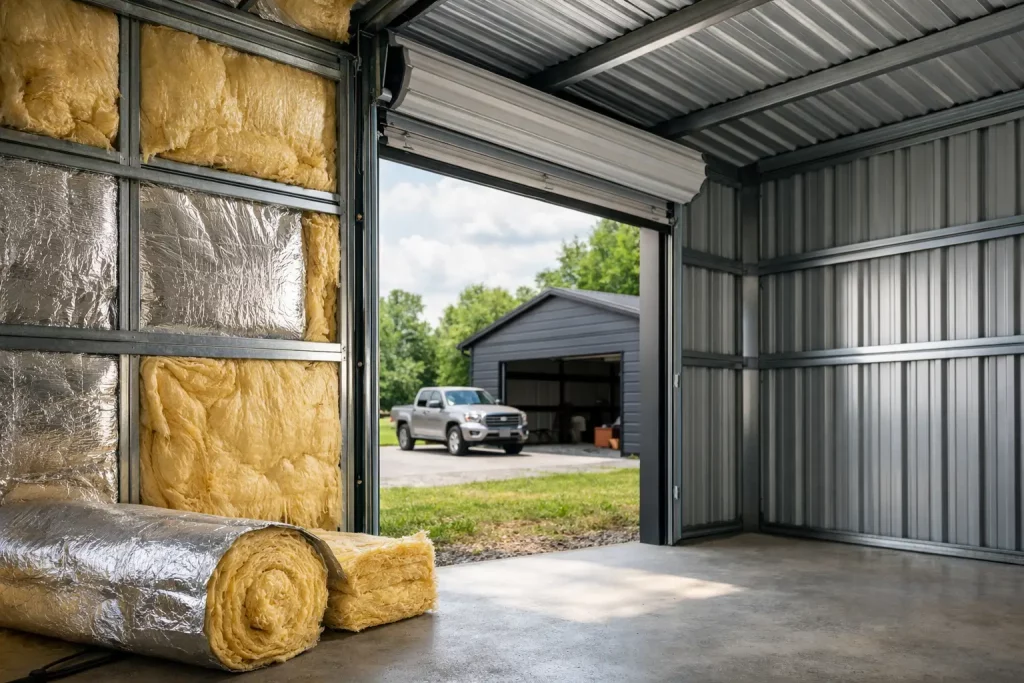
A metal garage can feel solid, secure, and low maintenance from day one – until you walk inside on a hot afternoon or notice moisture forming under the roof on a cool morning. That is usually when the question comes up: do metal garages need insulation? The short answer is no, not every metal garage needs it. But many owners benefit from it, especially if the building will be used for more than basic covered storage.
The real answer depends on how you plan to use the garage, what climate you are in, and how much comfort and protection you expect from the building. Insulation is not a must for every project, but it can make a major difference in temperature control, condensation reduction, noise, and long-term usability.
Do metal garages need insulation for every use?
If your garage is only there to keep a vehicle out of rain, hail, and sun, insulation may not be necessary. A simple storage garage for equipment, lawn tools, or a spare truck can do its job well without adding insulated wall and roof systems. In that case, your priority may be weather protection, structural strength, and fast installation rather than interior climate control.
That changes quickly when the garage becomes a workspace, hobby shop, home gym, business storage area, or place to protect temperature-sensitive equipment. A bare metal structure transfers outside heat and cold much faster than many people expect. In the South, that can mean intense summer heat buildup. In cooler months, it can mean cold surfaces that attract condensation.
So the better question is not whether every metal garage needs insulation. It is whether your intended use justifies the added investment.
What insulation actually does in a metal garage
Insulation helps slow heat transfer through the roof and walls. That means your building does a better job holding a more stable indoor temperature instead of matching outdoor conditions as quickly. If you plan to heat or cool the garage, insulation becomes even more important because it helps that equipment work efficiently.
It also plays a key role in moisture control. Condensation is one of the most common issues in metal buildings. When warm, humid air meets a cooler metal surface, water can form on the underside of panels. That moisture can drip onto vehicles, tools, cardboard boxes, feed, or anything else stored inside. Over time, it can create rust, mildew, and general wear that defeats part of the reason people choose enclosed protection in the first place.
Insulation can also reduce outside noise. Rain on a metal roof is not always a problem, but if you use the garage as a workshop or spend a lot of time inside, sound control can make the space more comfortable.
When insulation makes the most sense
A few situations make insulation a smart upgrade rather than an optional one. If you will spend regular time inside the garage, insulation usually pays off in comfort alone. The same is true if you plan to install electrical service, climate control, finished interior walls, or any type of workspace setup.
It is also worth serious consideration if you are storing vehicles that you want to protect from humidity swings, or if you are keeping supplies, inventory, animal feed, tack, tools, or materials that can be damaged by moisture. For agricultural and small business buyers, that can be a practical issue, not just a comfort issue.
In Tennessee and across much of the South, humidity is often the deciding factor. Even if winter conditions are mild compared to northern states, warm days and cool nights can still create moisture problems inside an uninsulated metal building. For many owners, controlling condensation is the main reason to insulate.
When you may not need it
If your garage is strictly for open-use vehicle storage and you are not finishing the interior, heating the space, or storing moisture-sensitive items, insulation may not deliver enough value to justify the cost. That is especially true for a basic garage used occasionally, with plenty of ventilation and no expectation of indoor comfort.
Some buyers are better served by investing first in the right building size, gauge, roof style, doors, and site prep instead of putting budget into insulation. A well-designed metal garage without insulation can still be a very effective structure. It just will not perform the same way as a conditioned or semi-conditioned space.
This is where good planning matters. Insulation should support the way you will actually use the building, not the way you might use it someday if nothing changes.
Common problems insulation can help prevent
The biggest issue is condensation. Many first-time metal building buyers assume leaks are the only source of interior moisture. In reality, a garage can be fully sound and still develop water droplets on the inside because of temperature differences and humidity.
That matters for more than appearances. Condensation can shorten the life of items stored inside, create slippery spots on the floor, and make the building feel damp. If the garage includes framing, interior finishes, or electrical components, repeated moisture exposure can become a bigger maintenance concern.
Heat gain is another major factor. Metal roofs absorb solar heat, and without insulation, that heat can build quickly inside. If you have ever opened an enclosed metal structure in late summer and felt the temperature hit all at once, you have seen the effect. Insulation helps reduce that extreme swing and can make the garage more usable during the hottest parts of the year.
Which insulation options are common for metal garages?
The best option depends on your budget, how finished the garage needs to be, and whether moisture control or temperature performance is the top priority.
Reflective insulation is a common choice for basic applications. It is often used to help reduce radiant heat and can provide a moisture barrier when installed correctly. This can be a practical fit for buyers who want a cost-conscious solution for a garage that is not fully conditioned.
Fiberglass insulation is another option, especially when paired with liner panels or a framed interior. It can provide strong thermal performance, but it needs to be installed correctly to avoid trapping moisture or leaving exposed areas vulnerable to damage.
Spray foam delivers strong air sealing and insulation performance, and it can be especially effective for reducing condensation. It also tends to cost more than other options, so it is often chosen for garages that function as workshops, business spaces, or heavily used utility buildings.
There is no single best answer for every structure. The right system depends on how enclosed the building is, how often it will be occupied, and whether you plan to heat or cool the space.
Building design still matters
Insulation works best as part of a complete plan. Ventilation, roof style, door placement, and site conditions all affect how a metal garage performs. Ridge vents, gable vents, and other airflow features can help reduce trapped heat and moisture. The same goes for choosing the right building height and layout for your use.
That is why the conversation should happen early, not after the garage is already installed. If you know you may want insulation, interior finishing, or climate control later, it often makes sense to plan for it from the beginning. That can help avoid costly retrofits and make sure the building is configured to support the upgrade.
For buyers comparing garage options, this is one of the most overlooked value questions. A lower initial price on a bare structure may look attractive, but if the building will need insulation, power, and interior upgrades soon after installation, it is better to account for that upfront.
So, do metal garages need insulation?
Sometimes yes, sometimes no. If your goal is basic shelter for vehicles and equipment, an uninsulated garage may be all you need. If you want a space that stays more comfortable, protects against condensation, supports storage of sensitive items, or works as a shop, insulation is often a worthwhile investment.
The key is matching the building to the job. A metal garage should not just look right on paper. It should perform the way you need it to through every season, under real working conditions, and with the least amount of hassle over time.
If you are planning a garage for more than simple cover, think past the base structure and ask how the building needs to function a year from now, not just on installation day. That is usually where the right insulation decision becomes clear.