If you are weighing red iron versus cold formed for a new building, the right answer usually comes down to what you need the structure to do on day one and how you expect it to perform five or ten years from now. A hay barn, a workshop, a retail space, and a warehouse do not place the same demands on a frame, so the better system is the one that fits your budget, site, code requirements, and long-term use.
That is where many buyers get stuck. Both options are steel. Both can be engineered. Both can deliver a durable, low-maintenance building. But they are not interchangeable, and choosing based on price alone can create problems later with spans, loading, insulation, interior layout, or permitting.
Red iron versus cold formed: what is the difference?
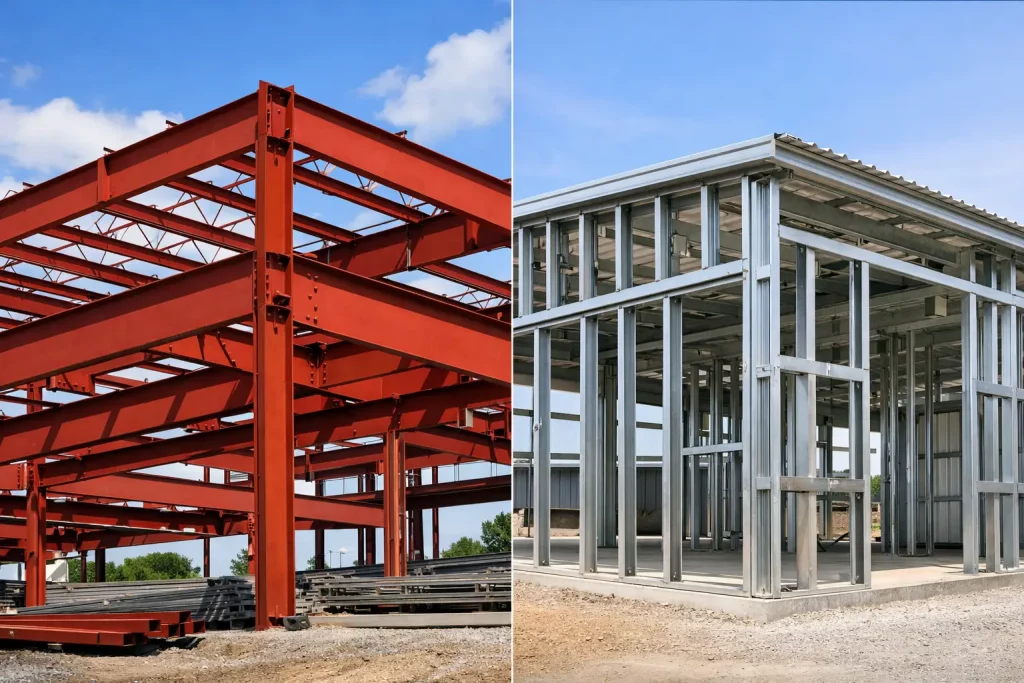
Red iron buildings use hot-rolled structural steel for the primary frame. The name comes from the red oxide primer commonly applied to the steel members. These buildings are known for strength, wide clear spans, and the ability to handle larger commercial or industrial applications.
Cold formed buildings use steel that is formed at room temperature into lighter-gauge structural components. Instead of large hot-rolled I-beams and rigid frames, cold formed systems rely on engineered members shaped for efficiency and assembled into a structural package that can work well for many commercial, agricultural, and specialty projects.
The key difference is not just weight. It is how the system carries loads, how it is engineered, and where it makes the most sense. Red iron is often the better fit when you need large open interiors, taller sidewalls, or heavier-duty structural performance. Cold formed can be a smart option when code requirements, project scale, material efficiency, and controlled costs matter more than maximum span.
Where red iron buildings usually make the most sense
Red iron is often the first choice for larger commercial shops, warehouses, manufacturing spaces, equipment storage buildings, and aviation or industrial uses. If you need a building with wide clear-span space and minimal interior columns, red iron has a strong advantage.
That matters in everyday use. A business owner may need room for lifts, forklifts, inventory racks, or vehicle circulation. A farmer may want uninterrupted space for large equipment. A contractor may need a shop that can adapt as the business grows. In those situations, the heavier structural frame can justify the higher upfront cost.
Red iron also tends to be the right conversation when the building will carry heavier loads or support more demanding design conditions. Taller buildings, crane systems, mezzanines, and certain high-use commercial environments often push a project toward hot-rolled steel framing.
None of that means red iron is always better. It means it is better when performance needs are driving the project.
Where cold formed buildings have a real advantage
Cold formed systems can be very effective for buyers who need an engineered steel building without stepping into a heavier structural package than the project requires. In the right application, this approach can save money on materials, reduce shipping weight, and support a faster path from planning to installation.
This is especially useful for code-driven projects where engineered documentation matters, but the building does not require the same heavy frame you would see in a large warehouse or industrial facility. Depending on the design, cold formed can be a practical fit for office buildings, retail support spaces, mini storage, agricultural structures, and selected commercial applications.
Another benefit is flexibility in panelized or pre-engineered systems. For some owners and contractors, that can make staging and assembly more manageable. If a project needs a balance between strength, efficiency, and cost control, cold formed deserves a serious look.
Cost is important, but it is not the whole story
A lot of buyers start with one question: which one is cheaper?
The honest answer is that it depends on the building size, the loads, the local code, the foundation design, and the intended use. Cold formed can come in at a lower cost in the right scenario, especially when the building does not need long clear spans or heavy structural support. But if you force a lighter system into an application better suited for red iron, you may lose those savings through design compromises or added complexity.
Red iron usually carries a higher material cost, but it can deliver value in ways that matter over time. Fewer interior columns, better open-floor usability, and stronger support for future modifications can make the total investment worthwhile.
This is why real pricing should be tied to an actual building plan, not just a square-foot guess. The frame is only one piece of the project. Doors, insulation, windows, site prep, concrete, and installation all affect the final number.
Red iron versus cold formed for wind, weather, and codes
In the South, weather is not a side issue. Wind exposure, storm risk, and local code enforcement can shape the entire project. Both red iron and cold formed buildings can be engineered to meet required loads, but the path to compliance may look different depending on the building type and location.
For some projects, cold formed is attractive because it can be designed to satisfy specific code requirements with an efficient structural package. For others, especially larger spans or more demanding occupancy types, red iron may provide the cleaner structural solution.
This is one reason buyers should not treat steel buildings like off-the-shelf boxes. What works for a basic storage application may not work for a commercial operation, a barndominium shell, or a higher-risk site. In Tennessee and similar markets where code, wind, and use conditions vary by project, engineering matters more than marketing language.
Interior function should drive the frame choice
One of the most overlooked parts of this decision is how you plan to use the building every day. A structure that looks good on paper can become frustrating if the framing interferes with equipment flow, shelving, overhead doors, office build-outs, or future expansion.
Red iron is often the better option when interior openness matters. If you want large clear bays, tall door openings, or room for commercial operations, it gives you more freedom.
Cold formed can still work very well, but it is best chosen with a clear understanding of layout needs. If the building use is more straightforward and does not demand major open-span performance, it may be the more efficient system.
The practical question is simple: are you buying the lowest-cost frame, or are you buying a building that will work better every week you own it?
Installation timelines and project flow
Speed matters for many buyers, especially when the building supports business operations, farm storage, or a planned expansion. Cold formed systems can offer advantages in handling and assembly because the components are lighter. That can simplify certain stages of transport and erection.
Red iron projects may involve heavier members and more equipment on site, but that does not automatically mean they are slow. On larger projects, the structural efficiency of red iron can be exactly what keeps the job on track.
A faster project is not just about the frame type, either. Engineering turnaround, permitting, site readiness, concrete scheduling, and installer availability often have just as much impact as the steel package itself.
How to choose between red iron and cold formed
Start with use case, not assumptions. If you need a large commercial building, wide-span shop, industrial space, or a structure designed around open interior performance, red iron is often the stronger candidate.
If your project is code-sensitive, cost-conscious, and well suited to a lighter engineered system, cold formed may be the smarter fit. That is especially true when the design does not require maximum span or heavier primary framing.
The best decisions usually come from matching the system to the job rather than trying to make one system win every comparison. A dependable building supplier should ask about your dimensions, doors, insulation, site conditions, occupancy, and future plans before recommending either option.
For buyers who want a straightforward path, that is where working with a provider that can handle both standard metal buildings and cold formed solutions makes a difference. You get a recommendation based on fit, not a one-size-fits-all sales pitch.
A steel building is a long-term purchase. The right frame should support your workflow, your budget, and your local code requirements without forcing compromises you will feel later. If you are comparing red iron versus cold formed, the smartest next step is to price the building you actually need and let the intended use make the decision.