
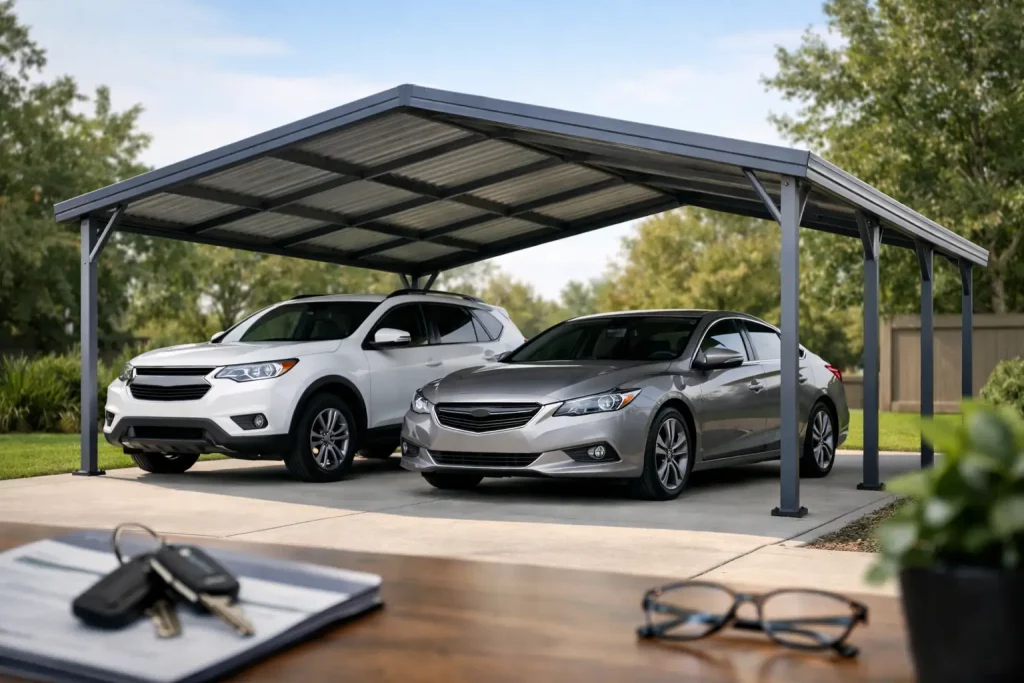
A cheap carport is easy to buy. The right one takes a little more thought. If you want real value, this steel carport buying guide starts with a simple truth: the best carport is the one that fits your vehicles, your site, and your weather conditions without forcing expensive changes later.
A steel carport should solve a practical problem. Maybe you need to protect a daily driver from sun and hail. Maybe you need a taller cover for a camper, tractor, or RV. Maybe you are trying to keep equipment dry and accessible without paying for a fully enclosed garage. Those are very different jobs, and they should not be answered with the same building.
What a steel carport should do well
At its core, a carport is about protection, access, and cost control. Steel is a strong fit for that job because it offers durability, low maintenance, and a faster path from quote to installation than many site-built alternatives. For property owners who need useful covered space without a long construction timeline, that matters.
That said, not every steel carport is equal. Frame strength, roof style, panel quality, anchoring, and local code requirements all affect long-term performance. A lower upfront price can turn into a weaker structure, limited lifespan, or a building that does not fit the way you actually use your property.
Start with use, not price
Most buying mistakes happen when shoppers begin with a budget number instead of the real use case. Price matters, but it should be tied to what you are protecting.
If the carport is for one sedan parked beside the house, a compact single-car unit may be enough. If you are covering a full-size truck with wide mirrors, opening doors regularly, or backing in with a trailer attached, you need more width and clearance than the vehicle spec sheet alone suggests. The same goes for farm and commercial use. Equipment needs room to enter, turn, and be serviced, not just fit under the roof.
Think through how the space will function on an ordinary day. Will you park once and leave it alone, or will you be in and out constantly? Will you store extra materials along the sides? Do you want partial enclosure for wind and rain? Those details are what separate a carport that works from one that becomes too tight within a year.
Size is more than width and length
A good steel carport buying guide has to spend time on dimensions because size affects everything else. Width and length are obvious, but height is often where buyers come up short.
Standard passenger vehicles usually do fine under lower side heights. Trucks, lifted vehicles, enclosed trailers, RVs, and farm equipment do not. Buyers sometimes choose the shortest workable height to save money, then find out they limited future use. If there is any chance you will upgrade vehicles, add a utility trailer, or use the structure for equipment storage, extra clearance is usually money well spent.
Length also deserves a careful look. A carport that technically covers the vehicle may still leave front or rear overhang exposed to blowing rain or afternoon sun. In the South, where weather can shift quickly and UV exposure is hard on paint and interiors, a little more coverage can make a noticeable difference.
Choosing the right roof style
Roof style changes both appearance and performance. For most buyers, the real question is how the roof handles water, debris, and local weather.
Regular roof carports are often the most economical. They can be a practical fit for basic coverage in milder conditions, especially when budget is the main driver. But they are not always the best option if you expect frequent heavy rain or want the cleanest runoff pattern.
Boxed eave and vertical roof designs offer a more residential look, and vertical roofs are typically the strongest option for channeling water, snow, and debris off the structure. If your property sees heavy rain, falling leaves, or the occasional winter event, a vertical roof can be a smart upgrade. It often costs more upfront, but the performance benefit is real.
This is one of those decisions where it depends on your site. A simple cover on a protected lot may not need the highest roof upgrade. An exposed area with open wind, tree cover, or demanding weather usually benefits from it.
Gauge, framing, and panel strength matter
Not all steel buildings are built with the same structural package. Buyers often focus on roof style and dimensions, but frame gauge and panel gauge deserve equal attention.
A heavier frame can provide more strength and better resistance in tougher conditions. Thicker panels can improve durability and overall feel. If your carport is going in a region with stronger wind exposure or if you simply want a more substantial build for long-term use, these upgrades are worth discussing.
This does not mean every buyer needs the heaviest configuration available. Overbuilding can add cost without adding useful value if your application is simple. The goal is to match the structure to the conditions. A knowledgeable dealer should be able to explain what is standard, what is upgraded, and why one package makes more sense for your site than another.
The site can make or break the project
A well-built carport still depends on proper placement and anchoring. Before you order, take a hard look at the installation area.
Level ground is ideal, but many properties are not perfectly level. If the site slopes, you may need prep work before installation. Surface type matters too. Concrete, asphalt, gravel, and ground installs each have different anchoring needs. Drainage is another major factor. If water collects around the slab or pad, that issue should be solved before the building goes up.
Access matters as well. Installation crews need room to work, unload materials, and assemble the frame safely. Tight fences, low tree limbs, and overhead utility lines can all create delays or force layout changes.
In Tennessee and across much of the South, storm patterns and wet ground conditions are part of the equation. A carport placed in the wrong spot can turn a simple project into an ongoing headache.
Enclosed sides, gables, and add-ons
Many buyers start by shopping for an open carport and then realize they want more protection. That is common, and it is usually smart to think through enclosure options early.
Side panels can block wind-driven rain and harsh sun. End panels and gables can improve coverage at the front and back. Fully or partially enclosed designs can shift the structure closer to a garage-style function while still keeping cost and install time under control.
These upgrades should be based on use. If you are only shielding a second vehicle from sun, an open design may be enough. If you are storing tools, lawn equipment, feed, or a side-by-side, enclosed sections can add meaningful protection. For commercial or agricultural users, that extra coverage often pays off in reduced wear and better organization.
Code requirements and local considerations
A steel carport is still a building project, and local requirements may apply. Depending on your county, city, or site conditions, you may need permits, engineered plans, or specific wind and snow load ratings.
This is where working with an experienced provider helps. You do not want to get deep into the buying process only to learn your chosen configuration does not meet local expectations. Code-driven projects, HOA restrictions, setback requirements, and site-specific needs should be addressed early.
For some buyers, especially those planning taller covers, larger footprints, or commercial use, this part is not optional. It is central to getting the project approved and installed without delays.
Customization should simplify the decision
Customization is one of the biggest advantages of steel carports, but too many options can overwhelm buyers if the process is not handled well. A good design process should make decisions clearer, not harder.
That is why tools like a 3D configurator can be helpful. Being able to adjust width, height, roof style, color, and side options in real time gives buyers a more accurate picture of what they are ordering. It also helps prevent common mistakes, like selecting a height that looks fine on paper but feels cramped in practice.
If you are comparing quotes, make sure you are comparing the same specs. A lower number may reflect lighter framing, fewer panels, lower height, or different anchoring assumptions. Price only means something when the structures are truly comparable.
How to buy with confidence
The best steel carport purchase usually comes from asking a few direct questions. What exactly am I protecting? What weather will this structure face? How long do I plan to use it? Do I want basic coverage, or do I want room to expand how I use the space later?
Once those answers are clear, the right configuration becomes easier to identify. For some buyers, that will be a straightforward single-vehicle cover. For others, it may be a taller vertical-roof carport with partial sides and upgraded framing. Neither choice is automatically better. The better choice is the one that matches the property and the job.
Taylor Wilson Steel works with buyers who need that kind of practical fit, whether the project is a simple residential carport or a more customized structure with code and site considerations in play.
A carport should feel like a solution the day it is installed and five years later when your needs change a little. Buy for the way you live and work now, but leave enough room for what comes next.