
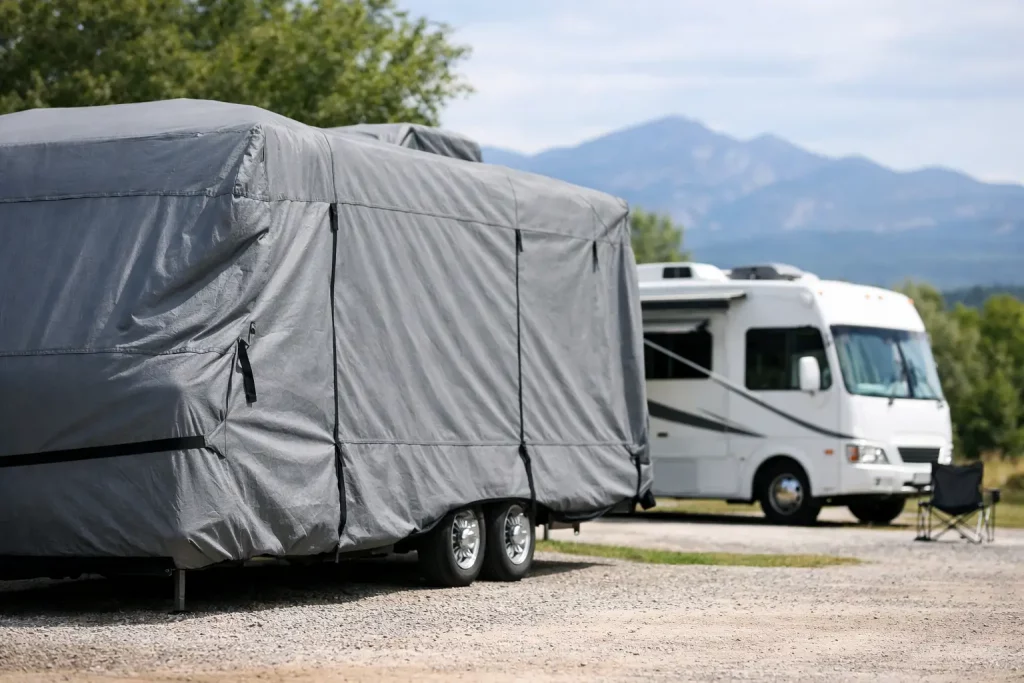
If you have ever walked out after a storm and found streaking on the sidewalls, cracked sealant around roof edges, or faded graphics from months of sun, the question comes up fast – are RV covers necessary? For some owners, a basic cover is better than leaving an RV completely exposed. But if you want reliable, year-round protection with less hassle, a permanent RV cover usually makes a lot more sense.
That distinction matters because not all protection works the same way. A fabric cover can help with dust, UV exposure, and light debris. It can also bring its own problems, especially in windy conditions, in humid climates, or when you need regular access to your camper, motorhome, or travel trailer. The real answer depends on how often you use your RV, where you store it, and how much protection you expect.
Are RV covers necessary in every situation?
No. They are not necessary in every case. If your RV is already stored inside a fully enclosed building, you probably do not need an additional cover. If it is parked short term between trips in mild weather, you may also decide that a temporary cover is not worth the effort.
But for outdoor storage, some type of overhead protection is usually a smart investment. Sun, rain, hail, tree debris, and standing moisture all take a toll over time. Roof maintenance becomes more frequent. Exterior finishes age faster. Rubber components and sealants break down sooner than many owners expect.
So the better question is not simply are RV covers necessary. It is what kind of cover gives you the level of protection your RV actually needs.
What fabric RV covers do well
A traditional RV cover has a place. It is usually the lower-cost option upfront, and it can reduce direct exposure to sun and weather when your unit sits for long periods. If you are storing an older camper seasonally and want a basic barrier against leaves, dust, bird droppings, and UV rays, a fabric cover can help.
For owners with limited space or no ability to install a structure, it may also feel like the easiest first step. You buy it, put it on, and at least your RV is not sitting completely uncovered.
That said, fabric covers work best when conditions are fairly controlled. If your site is open, windy, shaded and damp, or surrounded by trees, the limits show up quickly.
Where fabric covers fall short
The biggest issue is friction. Even a cover marketed as breathable and RV-safe can rub against the finish in wind. Over time, that movement can wear on paint, decals, and trim. If the cover loosens, sags, or is installed poorly, the risk goes up.
Moisture is another concern. Covers are supposed to breathe, but in humid Southern conditions, trapped moisture can still become a problem. That can lead to mildew, staining, and extra cleanup when you uncover the unit.
Convenience matters too. A fabric cover is not something most owners enjoy taking on and off regularly. If you use your RV often, the process gets old fast. That means many covers end up folded in storage while the RV sits outside anyway.
There is also the issue of durability. Fabric covers wear out. Sun exposure, wind stress, and repeated installation eventually break them down. So while the upfront price may be lower, replacement costs add up.
Why a steel RV cover is often the better answer
If your goal is practical, long-term protection, a steel RV cover solves problems a fabric cover cannot. Instead of wrapping the RV itself, you create a durable overhead shield that blocks sun, rain, hail, and falling debris before they ever hit the unit.
That changes the ownership experience. You can pull in and out without wrestling with fabric. You reduce direct roof exposure, which helps preserve sealants, vents, skylights, and rooftop equipment. You also cut down on heat buildup from constant sun, which is especially valuable in the South.
A steel RV cover is also built for repeat use. It does not need to be replaced every few seasons like a fabric product often does. With the right sizing and installation, it becomes a dependable part of your property rather than another accessory to manage.
Are RV covers necessary if you live in the South?
In many Southern markets, some kind of RV protection is more important than people think. The issue is not just heavy rain. It is the combination of intense UV exposure, long humid seasons, pop-up storms, and occasional hail. That mix wears on an RV steadily, even when damage is not obvious at first.
Sun is one of the biggest culprits. It fades finishes, dries out rubber components, and speeds up sealant failure. Once roof seals start to crack, water intrusion becomes a much more expensive problem than most owners planned for.
Humidity adds another layer. Moisture that lingers on the roof or around seams can shorten the life of exterior materials. If your RV sits under trees, you also get sap, limbs, and debris collecting on top, which means more maintenance and more opportunities for hidden damage.
For many property owners in Tennessee and across the broader Southern region, an RV cover is less about appearance and more about protecting a major investment.
Choosing the right type of RV protection
The right solution depends on your setup and how you use your RV.
If you store a camper for a few months each year and need the cheapest temporary option, a fabric cover may be enough. It gives you some protection, especially if the storage area is fairly sheltered and you do not need frequent access.
If you use your RV regularly, own a larger unit, or plan to keep it for years, a metal RV cover usually delivers better value. It protects the RV without touching it, it is faster to use, and it holds up far better under real weather conditions.
If you want the highest level of protection, an enclosed steel building takes things further. That setup protects not only from sun and rain but also from wind-driven weather, theft exposure, and more severe debris risks. For some owners, especially those storing higher-value motorhomes or keeping tools and gear with the unit, enclosure is the better long-term move.
Size and design matter more than people expect
A poorly sized RV cover can create almost as many problems as having no cover at all. If the structure is too short, too narrow, or too low, you lose the convenience that makes permanent protection worthwhile.
That is why clearance matters. Your cover should account for the full height of the RV, including air conditioning units, vents, antennas, and any future upgrades. Width and length should also allow for comfortable pull-through or back-in access, door clearance where needed, and enough overhang to improve rain protection.
Wind and snow load ratings matter too, depending on your area. A well-built steel structure should be selected for local conditions, not just chosen by appearance or base price. This is where working with an experienced building provider pays off. Custom sizing, roof style, panel options, and framing strength all affect how well the structure performs over time.
Cost now versus cost over time
A fabric cover usually wins on initial price. That is true. But lower upfront cost does not always mean lower total cost.
If you replace the cover more than once, deal with finish wear from movement, or still spend money repairing weather-related damage, the math changes. The same goes for added labor and frustration every time you cover and uncover the RV.
A steel RV cover requires a bigger initial investment, but it also brings a different kind of return. You get stronger protection, easier daily use, and a structure that adds function to your property. In many cases, it helps extend the life of the RV and reduce maintenance headaches at the same time.
That is why many buyers eventually move past the question of whether RV covers are necessary and start asking what solution is worth paying for once.
When a permanent RV cover makes the most sense
A permanent cover is usually the better fit if your RV stays outdoors year-round, if you use it often, if your area gets strong sun or storms, or if you simply want less maintenance and better access. It also makes sense if you own a newer or higher-value unit and want to protect that investment with something more substantial than fabric.
For property owners who want a dependable, low-maintenance answer, a steel RV cover offers a straightforward advantage. It is built to handle weather, built to last, and built around actual use. Companies like Taylor Wilson Steel help customers configure RV covers that fit their equipment, property layout, and local load requirements, which makes the buying process much more practical than guessing at a one-size-fits-all option.
If your RV matters enough to protect, the best answer is usually the one you can count on every season, not just the one that costs the least on day one.