
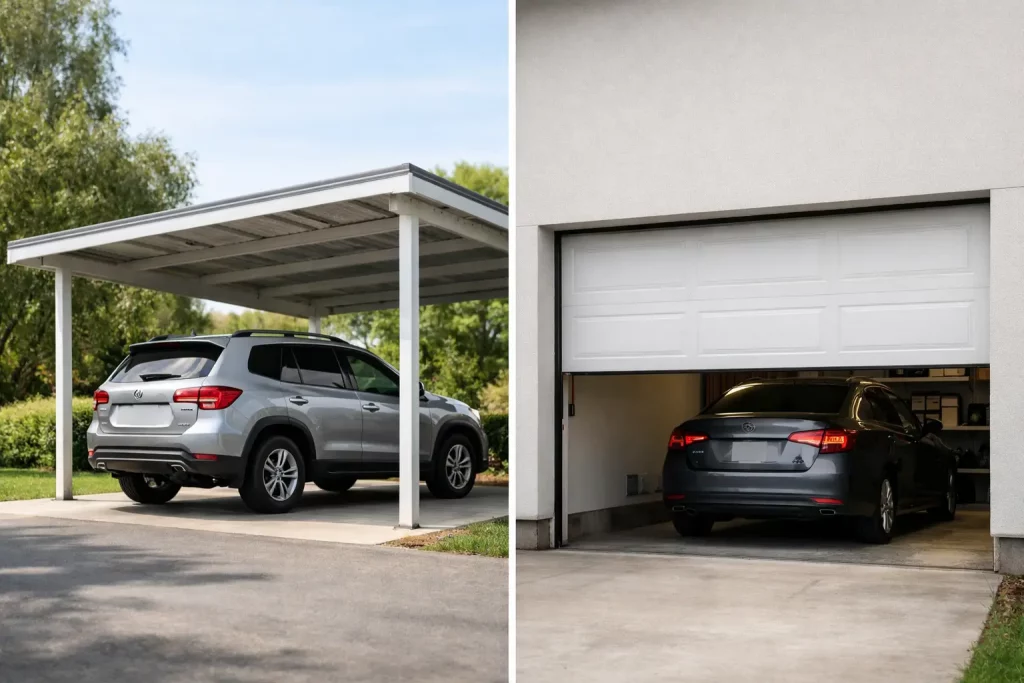
When a truck, tractor, camper, or daily driver is sitting out in the weather, the question gets practical fast. In a carport versus enclosed garage decision, most property owners are not choosing between good and bad. They are choosing between two useful structures that solve different problems, at different price points, with different long-term payoffs.
For some buyers, a carport is the smart move because it delivers fast coverage, lower cost, and flexible sizing without overbuilding. For others, an enclosed garage is worth the added investment because it brings security, storage, and true all-weather protection. The right answer depends on what you are storing, how you use your property, and what you need the building to do five years from now.
Carport versus enclosed garage: the real difference
A carport is an open-sided or partially enclosed structure designed to shield vehicles and equipment from sun, rain, hail, and debris. It is straightforward, efficient, and often the fastest way to add covered space to a property. In metal building terms, it can be customized with roof style choices, side panels, gable ends, and varying heights to fit everything from compact cars to RVs and farm equipment.
An enclosed garage goes further. It adds full walls, framed openings, garage doors, walk-in doors, and often windows or insulation options. That changes the function of the building. Instead of simple overhead protection, you get secured storage, a cleaner interior environment, and a structure that can double as a workshop, hobby space, or small business utility building.
That distinction matters because many buyers start by thinking about vehicle protection and then realize they also need tool storage, lockable access, or room to work out of the weather.
Cost usually decides the first round
If budget is driving the conversation, a carport usually has the advantage. It uses fewer materials, takes less labor to install, and can often be added without the higher total investment that comes with a fully enclosed building. For homeowners and landowners who need immediate coverage for one or two vehicles, that makes a carport an efficient solution.
A garage costs more because it does more. Full wall panels, framed openings, doors, and optional upgrades add to the total. If you want insulation, extra ventilation, heavier-duty framing, or a larger footprint for shop use, the number climbs further.
Still, lowest upfront cost is not always lowest overall value. If a buyer starts with a carport and later needs secure storage, workspace, and better weather control, they may end up wishing they had built a garage first. The smarter financial move depends on whether your needs are basic and stable or likely to grow.
Weather protection is not the same as full protection
A metal carport does a solid job blocking direct sun, rainfall, and falling debris. That alone can make a real difference in paint life, interior temperatures, and general wear on vehicles and equipment. In the South, where heat and UV exposure are relentless, that shade has practical value every day.
But a carport is still open to wind-driven rain, blowing dust, drifting snow in colder areas, and shifting temperatures. If your goal is simply to keep a vehicle from baking in the sun or getting covered in leaves, that may be enough.
An enclosed garage offers a higher level of defense. Walls and doors help reduce exposure to moisture, dirt, and storms. They also create a more controlled interior space for stored tools, supplies, feed, parts, and household overflow. If you are protecting items that rust easily, hold value, or need to stay cleaner and drier, a garage has the edge.
Security changes the equation
This is where many property owners stop comparing and start deciding.
A carport protects from weather, but it does not secure what is underneath. Tools in the bed of a truck, ATVs, mowers, trailers, and stored materials remain visible and accessible. For rural properties set back from the road, that may not be a major concern. For homes with expensive equipment or business inventory on site, it often is.
An enclosed garage gives you lockable access and visual privacy. That matters if you store power tools, lawn equipment, motorcycles, project vehicles, or anything you do not want exposed. It also matters if the structure is serving a business function, even informally, such as housing materials, parts, or service equipment.
If security is one of your top three priorities, an enclosed garage is usually the better fit.
Storage and daily use matter more than many buyers expect
A carport is excellent at being a carport. It keeps vehicles covered and can handle tall clearance needs for RVs, boats, trailers, and tractors better than many traditional garages. If your main concern is access and simplicity, open-sided coverage is hard to beat.
But enclosed space gets used differently. Once you have walls, you gain perimeter storage, shelving options, workbenches, and a place to keep items organized instead of stacked under tarps or spread across multiple outbuildings. That extra utility often becomes the reason buyers are happiest they chose a garage.
Think about your routine. Do you want to pull in, unload groceries, and walk straight into a protected space during bad weather? Do you need room to work on equipment without watching the forecast? Do you want to store seasonal items, feed, tack, small machinery, or business supplies in one place? If yes, an enclosed garage starts to make more sense.
Carport versus enclosed garage for future flexibility
A lot of buyers frame this as a simple vehicle-storage question when it is really a property-planning question.
A carport is flexible in a practical way. It can cover changing vehicle sizes, provide open access from multiple sides, and often fit a site with fewer complications. It also works well as a first-stage solution when speed and affordability matter most.
An enclosed garage is flexible in a broader way. It can begin as vehicle storage and later serve as a workshop, hobby building, side-business space, or general-purpose storage structure. That expanded use is one reason enclosed buildings often feel like a longer-term investment.
If you know your needs are going to stay simple, a carport may be exactly right. If you suspect the space will need to do more over time, it is worth planning for that now.
Permitting, site conditions, and installation
This part depends on location, building size, and local code requirements. In some areas, a basic carport may move through the process more easily than a fully enclosed garage. In other cases, wind rating, snow loads, anchoring, and site prep are the bigger considerations no matter which building type you choose.
That is one reason steel buyers benefit from working with a provider who can help match the structure to the site and intended use. A simple cover for a couple of vehicles is one thing. A garage with doors, insulation plans, and code-driven requirements is another.
Installation timelines also tend to favor carports, especially for standard configurations. Enclosed garages can still move quickly with the right planning, but there are more choices to make and more components involved. If you need protection fast, that can affect the decision.
Which option adds more value?
Property value is never just about resale. It is also about usefulness.
A carport adds functional value by protecting vehicles and equipment at a lower entry cost. For many buyers, that is enough to justify the project on its own. It solves a clear problem without turning into a major build.
An enclosed garage often adds broader value because it combines protection, storage, security, and multipurpose space. Buyers tend to see it as a more complete improvement, especially when it is well-sized, properly placed, and designed to match the property.
That said, the best return comes from choosing the structure you will actually use well. A large garage that stretches the budget and sits half empty is not automatically a better investment than a carport that gets constant, practical use.
So which one should you choose?
Choose a carport if your top priorities are cost, speed, easy access, and dependable overhead protection for vehicles or equipment. It is a strong fit for daily drivers, work trucks, RVs, tractors, and anyone who wants solid coverage without paying for enclosed space they do not need.
Choose an enclosed garage if you need lockable storage, cleaner interior conditions, more protection from storms, or space that can function as more than vehicle parking. It is the better choice when security, storage, and versatility matter as much as weather coverage.
For a lot of property owners, the decision comes down to one honest question: Are you trying to cover something, or are you trying to house it? That answer usually points you in the right direction.
If you are still weighing sizes, layout, and budget, a configurable steel building approach makes the comparison easier because you can price real options instead of guessing. And once the numbers are clear, the right structure usually stops looking complicated and starts looking obvious.